Devi Durga: Incarnations, Deeds, and the Eternal Dance of Shakti
269 Visited Goddess Durga • Updated: Friday, 19 September 2025
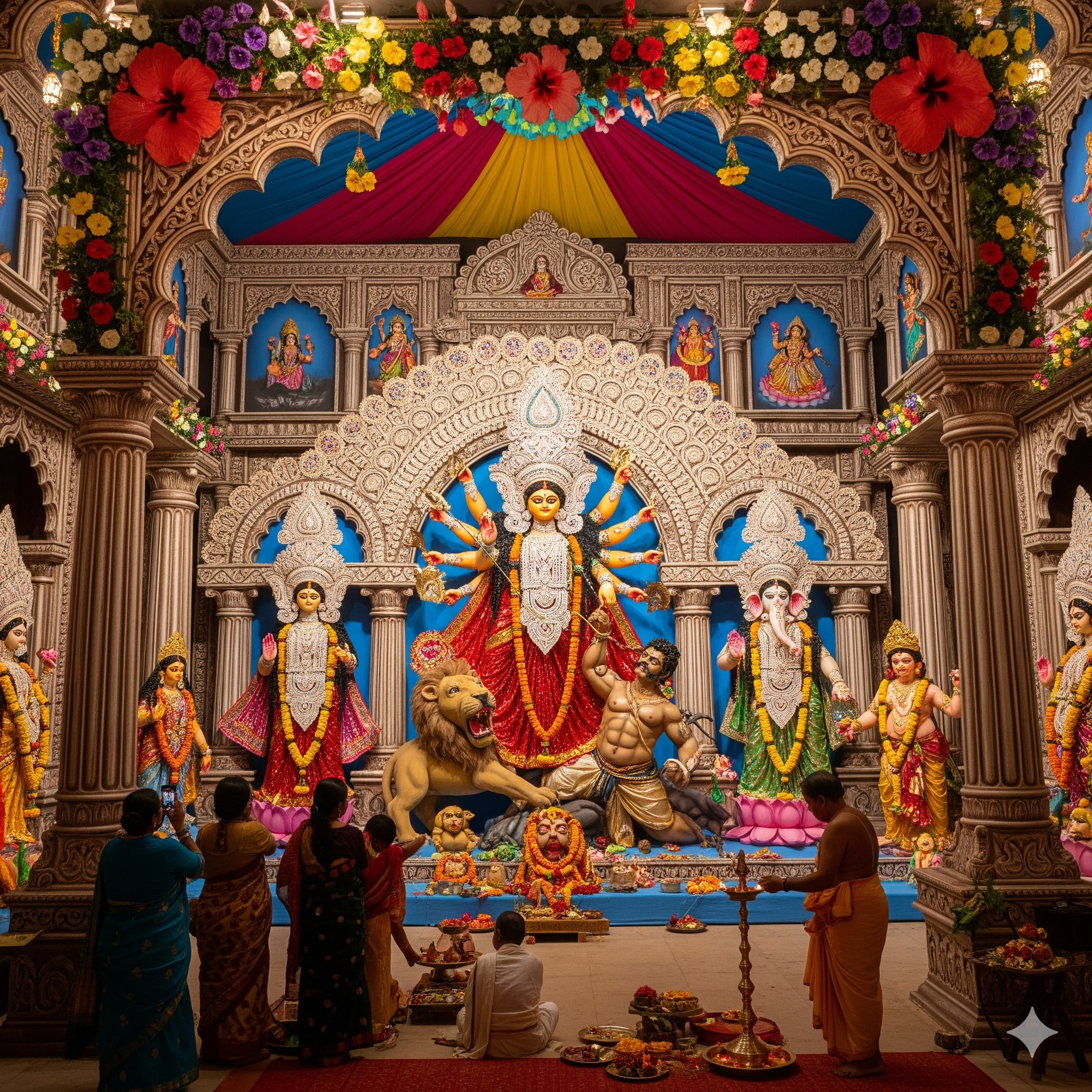
Devi Durga: Incarnations, Deeds, and the Eternal Dance of Shakti
In the vibrant tapestry of Hinduism, few deities command as much reverence and awe as Devi Durga. More than just a goddess, she is the quintessential embodiment of Shakti—the primordial cosmic energy that powers the universe. Her name, meaning "the one who overcomes all difficulties," perfectly encapsulates her role as a fierce protector of the righteous and a relentless destroyer of evil.
Durga's mythology is a magnificent saga of divine power, where she manifests in various forms to restore cosmic balance. Her most celebrated manifestations are the Navadurga, the nine forms worshipped with immense devotion during the auspicious festival of Navaratri. Each incarnation tells a unique story, highlighting different facets of her boundless strength and compassion.
Let's delve into the divine forms and legendary deeds of Devi Durga:
The Navadurga: Nine Forms, Infinite Power
The Navadurga represent the different stages and powers of the Goddess, particularly during her epic battle with the formidable buffalo demon, Mahishasura.
-
Shailaputri: The Daughter of the Mountain
-
Incarnation: The very first form of Durga, born as the daughter of King Himavan (the Himalayas). She embodies purity, stability, and devotion.
-
Deed: As Sati, she sacrificed herself out of devotion to Lord Shiva, protesting her father Daksha's insult. She then reincarnated as Parvati, destined to reunite with Shiva, signifying resilience and the triumph of divine love.
-
-
Brahmacharini: The Austere Ascetic
-
Incarnation: Representing penance and asceticism, she is depicted holding a rosary and a water pot, symbolizing spiritual discipline.
-
Deed: Her rigorous penance to win Lord Shiva as her consort exemplifies unwavering dedication and the power of self-control. She inspires devotees to pursue spiritual growth with determination.
-
-
Chandraghanta: The Bell-Mooned Warrior
-
Incarnation: Adorned with a crescent moon on her forehead that resembles a bell, she is fierce and ever-ready for battle, emanating a divine aura.
-
Deed: Her formidable presence and the terrifying sound of her bell-like moon struck fear into the hearts of demons, marking her as a crucial warrior against evil.
-
-
Kushmanda: The Cosmic Creator
-
Incarnation: Believed to have created the entire universe with a radiant smile, she is the source of all energy and light.
-
Deed: The act of cosmic creation itself is her greatest deed. From a void, she brought forth light and life, demonstrating her ultimate power as the universal mother.
-
-
Skandamata: The Mother of Skanda
-
Incarnation: Depicted holding her son Kartikeya (Skanda), the god of war, on her lap. She symbolizes maternal love and protection.
-
Deed: As the loving mother, she protects her devotees and grants them salvation and prosperity, embodying nurturing care and compassion.
-
-
Katyayani: The Warrior Goddess
-
Incarnation: A powerful and fearsome form, born from the collective wrath of the gods to destroy Mahishasura.
-
Deed: She is central to the ultimate confrontation with Mahishasura, playing a pivotal role in subduing the demon and his army with her formidable power.
-
-
Kalaratri: The Dark Night of Destruction
-
Incarnation: The most fierce and terrifying form, dark-complexioned with disheveled hair, representing the destroyer of ignorance and darkness.
-
Deed: Her legendary act includes slaying the formidable demons Shumbha, Nishumbha, and especially Raktabija. Raktabija had the power to regenerate from every drop of his blood that touched the earth. Kalaratri famously drank his blood as it spilled, preventing regeneration and ensuring his defeat—a profound victory over seemingly insurmountable evil.
-
-
Mahagauri: The Greatly White
-
Incarnation: A serene and radiant form, pure white and peaceful, symbolizing purity and calmness.
-
Deed: After intense penance, her body became covered in grime. Lord Shiva cleansed her with the Ganges water, making her radiate a brilliant white light. Her deed signifies purification, washing away sins and granting purity.
-
-
Siddhidhatri: The Giver of Siddhis
-
Incarnation: The final form, possessing and bestowing all eight supernatural powers (Siddhis). Even Lord Shiva is said to have attained his powers by worshipping her.
-
Deed: She grants wisdom, enlightenment, and all forms of success, guiding devotees towards spiritual perfection and fulfilling their desires.
-
The Defining Deed: The Slaying of Mahishasura
While each of Durga's forms has its significance, her most iconic and celebrated deed is the slaying of the buffalo demon, Mahishasura. This epic battle is the cornerstone of Durga's legend:
-
The Boon of Invincibility: Mahishasura, through intense penance, received a boon from Brahma that no man or male god could kill him, making him virtually invincible.
-
Reign of Terror: Drunk with power, Mahishasura unleashed havoc across the cosmos, expelling the gods from their celestial abodes and establishing his tyrannical rule.
-
The Birth of Durga: Faced with an unbeatable foe, the gods, in their desperation, pooled their divine energies. From the combined power (Shakti) of Brahma, Vishnu, Shiva, and other deities, emerged the resplendent and formidable Devi Durga—a singular, ultimate feminine power.
-
The Epic Battle: Mounted on her fierce lion and wielding the weapons gifted by all the gods, Durga engaged Mahishasura in a relentless nine-day battle. The demon continuously shapeshifted, but Durga's power was unwavering.
-
Victory on Vijayadashami: On the tenth day, as Mahishasura was transforming from his buffalo form to a human, Durga seized the moment. She pinned him with her trident and, with a powerful swing, beheaded him, ending his reign of terror. This triumphant victory is celebrated as Vijayadashami, marking the triumph of good over evil.
Devi Durga, in all her forms, reminds us that the divine feminine is not just about nurturing love but also about incredible strength and fierce justice. Her stories are a timeless testament to the power of dharma and the eternal assurance that good will always prevail over evil. She is the ultimate embodiment of courage, compassion, and cosmic order, guiding her devotees through life's countless battles with her divine grace.
- The Divine Creation of Devi Durga: A Symbolic Representation of Feminine Power
- Festivals of Devi Durga
- Devotees of Devi Durga
- Stotras of Devi Durga
- Temple of Chitragupta Ji Maharaj near Tempo Stand, Kankarbagh, Patna (bihar)
- Lunar and Solar Eclipse in September 2025: Date and Time of Chandra Grahan and Surya Grahan
- Origin of Kayasth
- Puja Process With Katha of Shri Chitragupt Ji
- FAMILY OF SHEE CHITRAGUPTA JI
- Kayasthas as in the Puranas
Keywords : all cosmic deed devi divine durga evil fierce form forms her his incarnation mahishasura power shakti she shiva spiritual that
🔔 हमारे YouTube चैनल को सब्सक्राइब करें:
👉 https://www.youtube.com/channel/UC76hj0iZcKkiW1YizHs0n2Q/
📘 Facebook Page:
👉 https://www.facebook.com/DigiTatvaPlus
🌿 वेबसाइट विजिट करें:
👉 https://www.bhaktipulse.com/
👉 https://www.bhaktipulse.com/video
✨ Guest Post Invitation – Share Your Divine Wisdom
🙏 Welcome to BhaktiPulse – your spiritual companion for Aarti, Chalisa, Bhajan, Mantra, and divine stories.
🌸 Do you have spiritual knowledge, devotional content, experiences, or stories that can inspire others?
📖 We warmly invite you to contribute your valuable content and become a part of our growing spiritual community.
✨ Your content may include:
- 🪔 Aarti, Chalisa, Mantra, Bhajan
- 📜 Spiritual stories & life lessons
- 🔍 Unknown facts & scientific reasons in Sanatan Dharma
- 🌿 Ayurveda, rituals, and traditions
💡 If your content aligns with our vision, we will proudly feature it on BhaktiPulse.
📩 Submit your content or contact us here:
👉 https://www.bhaktipulse.com/contact.php
🌼 Let your words spread devotion, ज्ञान, and positivity to the world.
🙏 Join us in this divine journey!

💬 Comments
Approved Comments