Famous Temples in India: A State-Wise Journey Through Sacred Heritage, History & Spiritual Wisdom
320 Visited Temples • Updated: Wednesday, 06 May 2026
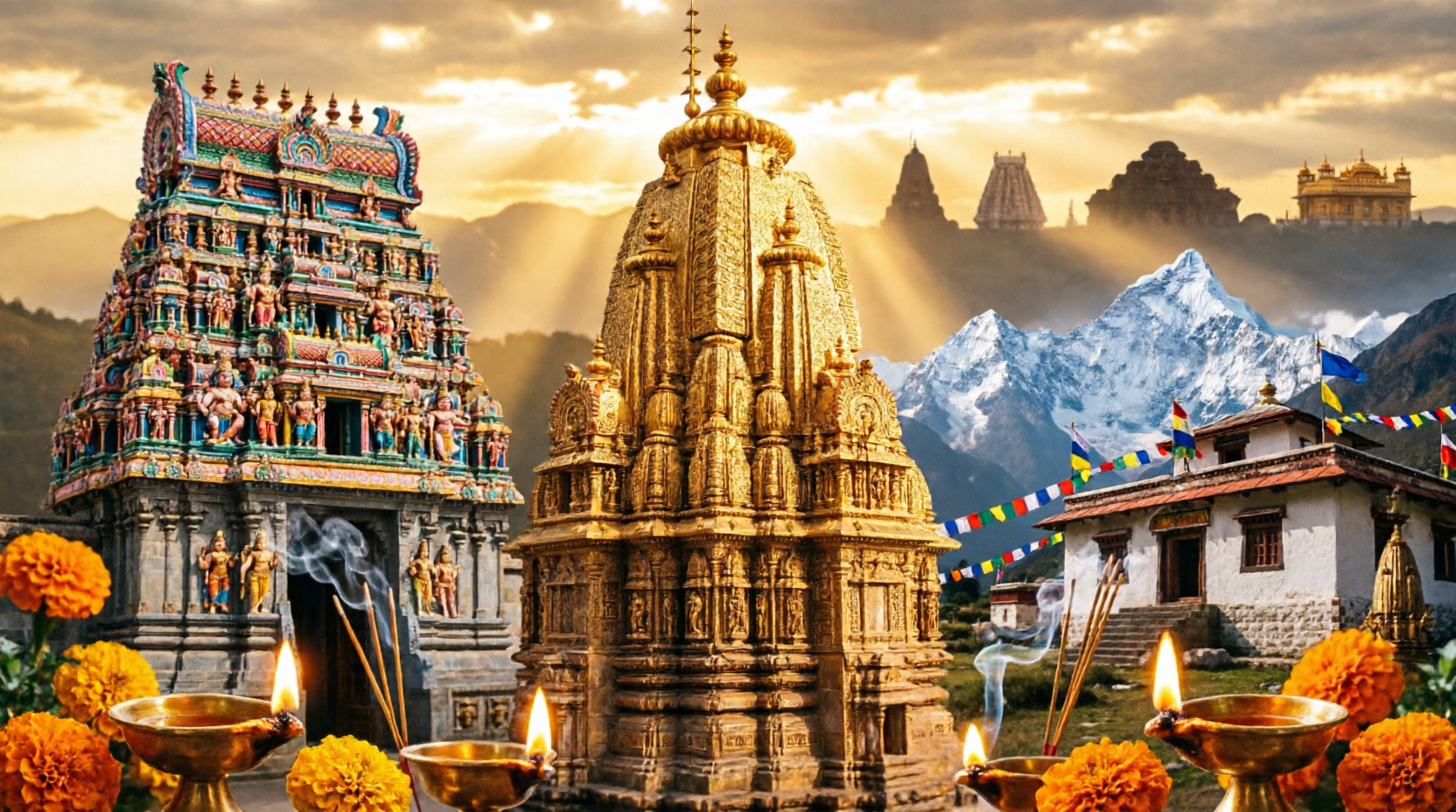
Famous Temples in India: A State-Wise Journey Through Sacred Heritage, History & Spiritual Wisdom
Introduction: India – The Land Where Spirituality Meets Stone
India is not merely a country; it is a living tapestry woven with threads of ancient wisdom, diverse faiths, and architectural grandeur. As the cradle of Hinduism, Buddhism, Jainism, and Sikhism, the Indian subcontinent has nurtured spiritual traditions for millennia. Across its varied landscapes—from the snow-capped Himalayas to the sun-kissed southern coastlines—stand thousands of temples that are far more than places of worship. They are repositories of history, masterpieces of art, and living symbols of devotion that continue to inspire millions.
These sacred structures tell stories of dynasties that rose and fell, of artisans who chiseled divinity into stone, and of devotees whose faith transcended time. Each temple carries within its walls the essence of India's cultural soul: the intricate carvings of Khajuraho speak of celestial love; the towering gopurams of Tamil Nadu proclaim divine majesty; the serene marble sanctums of Jain temples reflect inner purity; and the golden dome of the Golden Temple radiates universal brotherhood.
This comprehensive guide explores India's most famous temples, organized state-wise for easy reference. We delve into their historical origins, architectural brilliance, spiritual significance, and the timeless rituals that keep these ancient sites vibrantly alive. Whether you are a pilgrim seeking blessings, a history enthusiast tracing cultural evolution, or a traveler captivated by architectural wonders, this journey through India's sacred geography promises profound insights and inspiration.
Understanding India's Temple Traditions
Before we embark on our state-wise exploration, it's essential to understand the foundational concepts that shape India's temple culture:
The Philosophy Behind Temple Architecture
Indian temples are designed as cosmic diagrams (yantras) representing the universe. The sanctum (garbhagriha) symbolizes the cave of the heart where the divine resides. The towering spire (shikhara or vimana) represents Mount Meru, the axis of the cosmos. Circumambulatory paths (pradakshina) encourage meditative movement around the deity, while intricate carvings depict mythological narratives and philosophical truths.
Major Temple Styles Across India
-
Nagara Style (North India): Characterized by beehive-shaped towers, curvilinear spires, and square sanctums. Prominent in Uttar Pradesh, Madhya Pradesh, and Odisha.
-
Dravidian Style (South India): Features pyramid-shaped towers (gopurams), elaborate pillared halls, and temple tanks. Dominant in Tamil Nadu, Karnataka, Kerala, and Andhra Pradesh.
-
Vesara Style (Deccan Region): A fusion of Nagara and Dravidian elements, seen in Karnataka and parts of Maharashtra.
-
Kalinga Style (Odisha): Distinctive for its curvilinear towers and intricate stone carvings, exemplified by Konark and Puri temples.
Sacred Classifications
-
Jyotirlingas: Twelve most sacred shrines of Lord Shiva, representing his infinite light.
-
Shakti Peethas: 51 sacred sites where parts of Goddess Sati's body fell, centers of divine feminine energy.
-
Divya Desams: 108 holy abodes of Lord Vishnu revered in Tamil devotional literature.
-
Char Dham: Four ultimate pilgrimage destinations—Badrinath, Kedarnath, Gangotri, Yamunotri in the Himalayas; and Puri, Rameswaram, Dwarka, Badrinath in the pan-Indian circuit.
State-Wise Guide to India's Most Famous Temples
🏔️ UTTARAKHAND: The Abode of Gods in the Himalayas
Kedarnath Temple | Rudraprayag District
Deity: Lord Shiva | Significance: One of 12 Jyotirlingas; Char Dham site
Nestled at 3,583 meters amidst the majestic Garhwal Himalayas, Kedarnath stands as one of Hinduism's most revered shrines. According to the Skanda Purana, the temple was originally built by the Pandava brothers to seek Lord Shiva's forgiveness after the Kurukshetra war. When Shiva eluded them by taking the form of a bull, his hump manifested at Kedarnath, while other body parts appeared at four other locations (Panch Kedar).
Historical Journey: While mythological origins trace to the Mahabharata era, the current stone structure is attributed to Adi Shankaracharya (8th century CE), who revived Hindu pilgrimage circuits. The temple survived the devastating 2013 floods through what devotees consider divine intervention—the massive boulder behind the shrine reportedly deflected debris.
Architectural Marvel: Built with interlocking gray stone slabs without mortar, the temple's design withstands extreme Himalayan weather. The triangular-shaped lingam inside represents Shiva's eternal presence. The temple remains open only from April/May to October/November due to heavy snowfall.
Spiritual Insight: Kedarnath embodies the principle that true devotion requires perseverance. The challenging 16-18 km trek from Gaurikund symbolizes the soul's journey toward liberation, where every step becomes a prayer.
www.kinghillstravels.com
Badrinath Temple | Chamoli District
Deity: Lord Vishnu (as Badrinarayan) | Significance: Char Dham; 108 Divya Desams
Perched at 3,133 meters on the banks of the Alaknanda River, Badrinath is dedicated to Lord Vishnu in his meditative form. Legend states that Vishnu meditated here under a Badri tree (Indian jujube), hence the name. Goddess Lakshmi, taking the form of the tree, sheltered him from harsh weather.
Historical Context: While references appear in ancient texts like the Vishnu Purana, the temple's current form was established by Adi Shankaracharya in the 8th century. He installed the shaligram idol of Badrinarayan and appointed priests from South India, creating a unique cultural bridge between North and South.
Architectural Features: The temple showcases a blend of North Indian shikhara style with Buddhist influences. The black stone idol depicts Vishnu in padmasana (lotus posture). The complex includes the Tapt Kund (hot sulfur springs) where pilgrims bathe before darshan.
Spiritual Significance: Badrinath represents the culmination of the Char Dham journey—symbolizing moksha (liberation). The temple's six-month opening period (April-November) reminds devotees of life's impermanence and the urgency of spiritual pursuit.
inditirth.com
Yamunotri & Gangotri Temples | Uttarkashi District
Deities: Goddess Yamuna & Goddess Ganga | Significance: Char Dham; River worship
Yamunotri (3,291m): Marks the source of the Yamuna River. The temple, built by Maharaja Pratap Shah of Tehri Garhwal, houses a black marble idol of Goddess Yamuna. The nearby Surya Kund (hot spring) is where pilgrims cook rice as prasad, believing in its healing properties.
Gangotri (3,415m): Stands where the Ganges descended to Earth. According to legend, King Bhagirath's penance brought Ganga down to cleanse his ancestors' souls. The temple, constructed by Gorkha general Amar Singh Thapa, features a simple stone structure reflecting the river's pure, unadorned essence.
Spiritual Wisdom: These temples honor rivers as divine mothers. Bathing in their sacred waters symbolizes washing away karmic impurities. The high-altitude locations remind pilgrims that spiritual growth requires rising above worldly attachments.
www.kestrel-aviation.com
🕉️ UTTAR PRADESH: The Heartland of Spiritual Heritage
Kashi Vishwanath Temple | Varanasi
Deity: Lord Shiva | Significance: One of 12 Jyotirlingas; Oldest living city
Varanasi, one of the world's oldest continuously inhabited cities, houses the golden-domed Kashi Vishwanath Temple on the western bank of the Ganges. This shrine represents the axis of Hindu spirituality—where death is seen as a gateway to liberation.
Historical Layers: References to Kashi appear in the Rigveda (c. 1500 BCE). The temple has been destroyed and rebuilt multiple times: by Qutb-ud-din Aibak (1194), Firoz Shah Tughlaq (1351), Sikandar Lodi (1585), and finally restored by Maharani Ahilyabai Holkar of Indore in 1780. Maharaja Ranjit Singh donated the gold plating for the sanctum in 1839.
Architectural Essence: The current structure blends Rajput and Mughal styles. The 15.5-meter gold-plated spire and 900 kg gold dome shimmer in sunlight. The temple complex includes 37 smaller shrines, creating a microcosm of Hindu cosmology.
Spiritual Depth: Kashi Vishwanath embodies the concept that liberation (moksha) is accessible to all who die in Varanasi. The lingam here is svayambhu (self-manifested), representing Shiva's formless, eternal nature. Pilgrims believe that a single darshan here equals visiting all 12 Jyotirlingas.
in.pinterest.com
Ram Janmabhoomi Temple | Ayodhya
Deity: Lord Rama | Significance: Birthplace of Rama; Recent consecration
The newly consecrated Ram Mandir in Ayodhya marks one of contemporary India's most significant spiritual developments. Built on the believed birthplace of Lord Rama, the temple represents the fulfillment of a centuries-old aspiration.
Historical Context: While archaeological evidence and faith traditions point to Ayodhya as Rama's birthplace, the site witnessed complex historical layers. The current temple, constructed under the Shri Ram Janmabhoomi Teerth Kshetra trust, follows traditional Nagara architecture with intricate sandstone carvings.
Architectural Vision: Designed by architect Chandrakant Sompura, the three-storied temple stands 161 feet tall with 360 pillars depicting scenes from the Ramayana. Each brick bears the name "RAM," symbolizing that every element of the structure is infused with devotion.
Spiritual Significance: The temple rekindles the eternal values of dharma, compassion, and righteous leadership embodied by Lord Rama. For devotees, it represents not just a physical structure but the triumph of faith and cultural continuity.
www.instagram.com
Sankat Mochan Hanuman Temple | Varanasi
Deity: Lord Hanuman | Significance: Remover of obstacles
Founded by the 16th-century saint Tulsidas, author of the Ramcharitmanas, this temple is where he is believed to have had a vision of Hanuman. The name "Sankat Mochan" means "dispeller of troubles," attracting devotees seeking relief from life's challenges.
Unique Tradition: Unlike most temples, Sankat Mochan welcomes offerings of laddoos (sweet balls) and sindoor (vermilion). The temple's evening aarti features soul-stirring bhajans composed by Tulsidas himself.
Spiritual Message: Hanuman represents selfless service, unwavering devotion, and immense strength tempered with humility. The temple teaches that true power lies in surrendering the ego to a higher purpose.
🌊 ODISHA: The Land of Kalinga Architecture
Shri Jagannath Temple | Puri
Deities: Jagannath, Balabhadra, Subhadra | Significance: Char Dham; Rath Yatra
Puri's Jagannath Temple is one of Hinduism's most unique and vibrant pilgrimage centers. The temple's wooden idols, replaced every 12 or 19 years in a secret midnight ceremony (Nabakalebara), embody the concept of divine renewal.
Historical Evolution: While the site has been sacred since ancient times, the current structure was built by King Anantavarman Chodaganga Deva of the Eastern Ganga dynasty in the 12th century. The temple complex spans 400,000 square feet with four entrances representing the four Vedas.
Architectural Grandeur: The main temple rises 65 meters with the shikhara crowned by the nilachakra (blue wheel)—a discus visible from miles away. The Jagamohana (assembly hall) features intricate carvings depicting daily life, mythology, and celestial beings.
Rath Yatra Festival: Every June/July, the deities embark on a grand procession to their aunt's temple in massive wooden chariots. This festival, recognized by UNESCO as Intangible Cultural Heritage, symbolizes God's accessibility to all, regardless of caste or creed.
vajiramandravi.com
Konark Sun Temple | Konark
Deity: Surya (Sun God) | Significance: UNESCO World Heritage Site
Often called the "Black Pagoda," Konark is a masterpiece of 13th-century Kalinga architecture. Built by King Narasimhadeva I of the Eastern Ganga dynasty, the temple is designed as a colossal chariot of the Sun God.
Architectural Symbolism: The temple-chariot features 24 intricately carved wheels (representing the 24 fortnights of the Hindu calendar) pulled by seven horses (symbolizing the days of the week). Every surface is adorned with sculptures depicting celestial musicians, dancers, warriors, and scenes from everyday life.
Engineering Marvel: The main shikhara originally stood over 70 meters tall. Its collapse remains debated, but theories include structural weight, earthquakes, or deliberate destruction. The temple's orientation ensures that the first rays of sunrise illuminate the main entrance.
Spiritual Philosophy: Konark celebrates the Sun as the source of all life, energy, and time. The temple's design reflects the cosmic order (rita) and humanity's harmony with natural cycles. The erotic sculptures, often misunderstood, represent the celebration of life in all its aspects—physical, emotional, and spiritual.
www.scribd.com
Lingaraja Temple | Bhubaneswar
Deity: Lord Shiva (as Harihara) | Significance: Largest temple in Bhubaneswar
Dating to the 11th century, Lingaraja Temple exemplifies the mature Kalinga style. The 55-meter tower dominates Bhubaneswar's skyline, visible from across the city.
Unique Feature: The deity is worshipped as Harihara—a synthesis of Vishnu (Hari) and Shiva (Hara)—reflecting Odisha's tradition of religious harmony. Only Hindus are permitted inside the sanctum, preserving ancient ritual protocols.
Architectural Details: Built of sandstone and laterite, the temple complex includes over 150 smaller shrines. The Jagamohana features exquisite carvings of dancers, musicians, and mythological scenes that provide invaluable insights into medieval Odia society.
🌺 TAMIL NADU: The Dravidian Temple Treasury
Meenakshi Amman Temple | Madurai
Deities: Meenakshi (Parvati) & Sundareswarar (Shiva) | Significance: Architectural masterpiece; Cultural hub
Madurai's Meenakshi Temple is not just a religious center but the beating heart of a 2,500-year-old city. Dedicated to Goddess Meenakshi (the fish-eyed one) and her consort Sundareswarar, this temple complex is a symphony in stone.
Historical Layers: While references appear in Sangam literature (3rd century BCE–3rd century CE), the current structure was expanded by the Nayak rulers in the 16th–17th centuries. The temple served as a center for Tamil literature, music, and art for centuries.
Architectural Wonders:
-
14 Gopurams: Towering gateways, the tallest reaching 52 meters, covered with over 33,000 colorful sculptures depicting gods, demons, and mythological scenes.
-
Hall of Thousand Pillars: Actually 985 pillars, each carved from single granite blocks, with some producing musical notes when tapped.
-
Golden Lotus Tank: A sacred water body used for ritual purification and festivals.
Spiritual Significance: The temple celebrates the divine feminine. Meenakshi, depicted as a warrior-queen who conquered the world before meeting her consort, challenges conventional gender narratives. The annual Chithirai Festival reenacts her celestial wedding, drawing millions of devotees.
sridiya.com
Ramanathaswamy Temple | Rameswaram
Deity: Lord Shiva | Significance: One of 12 Jyotirlingas; Longest temple corridor
Located on Pamban Island, Rameswaram is where Lord Rama is believed to have worshipped Shiva before building the bridge to Lanka. The temple uniquely houses two lingams: the Ramalingam (created by Sita) and the Vishwalingam (brought by Hanuman from Mount Kailash).
Architectural Achievement: The temple boasts the longest corridor among Hindu temples—1,220 meters of intricately carved pillars creating a mesmerizing play of light and shadow. The corridor's 1,212 pillars feature sculptures depicting scenes from the Ramayana.
Ritual Significance: Pilgrims bathe in 22 sacred wells (theerthams) within the complex before darshan, each believed to have distinct purifying properties. The temple's location at India's southeastern tip symbolizes the meeting point of earthly and divine realms.
Brihadeeswara Temple | Thanjavur
Deity: Lord Shiva | Significance: UNESCO World Heritage Site; Chola masterpiece
Built in 1010 CE by Emperor Raja Raja Chola I, this temple represents the zenith of Chola architecture and engineering. Entirely constructed from granite, it stands as a testament to ancient India's technological prowess.
Engineering Marvels:
-
The 216-foot vimana (tower) is carved from a single 80-ton granite block, hauled four miles over an inclined plane—a feat that continues to puzzle modern engineers.
-
The Nandi (sacred bull) statue weighs 25 tons and is carved from a single rock.
-
The temple's shadow never falls on the ground at noon, demonstrating advanced astronomical knowledge.
Cultural Legacy: The temple complex includes frescoes, bronze sculptures, and inscriptions detailing Chola administration, economy, and society. It remains an active place of worship, connecting contemporary devotees with a millennium of continuous tradition.
www.jpost.com
Ranganathaswamy Temple | Srirangam
Deity: Lord Ranganatha (reclining Vishnu) | Significance: Largest functioning Hindu temple
Spread across 156 acres on an island formed by the Kaveri and Kolikdam rivers, Srirangam is a self-contained spiritual city. The temple complex features seven concentric walls (prakarams) and 21 towering gopurams.
Architectural Scale: The Rajagopuram (main tower) stands 236 feet tall with 13 tiers, making it one of Asia's tallest temple towers. The temple's layout follows Vastu Shastra principles, creating harmonious energy flows.
Spiritual Philosophy: The reclining posture of Lord Ranganatha on the serpent Ananta symbolizes the cosmic balance between creation and dissolution. The temple teaches that the divine rests within the ocean of consciousness, accessible through devotion and self-knowledge.
🏛️ ANDHRA PRADESH & TELANGANA: The Deccan's Sacred Legacy
Tirumala Venkateswara Temple | Tirupati
Deity: Lord Venkateswara (Vishnu) | Significance: Richest temple; Most visited pilgrimage site
Perched on the seven hills of Tirumala, this temple attracts 50,000–100,000 devotees daily, making it the world's most-visited place of worship. Lord Venkateswara, an incarnation of Vishnu, is believed to have manifested here to bless humanity in the Kali Yuga.
Historical Patronage: While references date to ancient Tamil literature, the temple flourished under the Pallavas, Cholas, and Vijayanagara Empire. The Vijayanagara kings donated vast wealth, including the iconic gold-plated vimana.
Economic Significance: The temple manages assets worth over $22 billion, making it one of the world's wealthiest religious institutions. Donations fund education, healthcare, and disaster relief, embodying the principle of dharma (righteous giving).
Spiritual Practice: The tonsure ceremony (head-shaving) symbolizes surrender of ego. Devotees believe that offering hair here fulfills vows and brings divine blessings. The temple's laddu prasadam is a protected geographical indication, reflecting its cultural uniqueness.
traveltriangle.com
Srisailam Mallikarjuna Temple | Kurnool District
Deity: Lord Shiva | Significance: One of 12 Jyotirlingas; One of 18 Shakti Peethas
Uniquely, Srisailam is both a Jyotirlinga shrine and a Shakti Peetha, where Goddess Bhramaramba (a form of Parvati) is worshipped alongside Lord Mallikarjuna. This dual sanctity makes it exceptionally sacred in Hindu tradition.
Mythological Background: Legend states that Shiva and Parvati manifested here as a jyotirlinga to bless their devotee, a merchant named Chandradhwaja. The temple's location in the Nallamala forest adds to its mystical aura.
Architectural Features: Built in the Dravidian style, the temple complex includes over 70 shrines. The gopurams feature vibrant sculptures depicting scenes from the Puranas and local folklore.
🌅 KERALA: The Serene South
Shri Padmanabhaswamy Temple | Thiruvananthapuram
Deity: Lord Padmanabhaswara (Vishnu) | Significance: World's wealthiest temple; 108 Divya Desams
The name "Thiruvananthapuram" itself means "The City of Lord Ananta," referring to the temple's presiding deity—Vishnu reclining on the cosmic serpent Ananta. The temple's recent revelation of hidden vaults containing treasures worth over $22 billion captured global attention.
Historical Guardianship: While ancient in origin, the temple's modern administration was shaped by the Travancore royal family. The last ruling Maharaja, Sree Chithira Thirunal, dedicated his reign to the temple's service, establishing the principle that the deity, not humans, is the true ruler.
Architectural Uniqueness: The temple blends Kerala and Dravidian styles. The gopuram is covered with 1,008 gold-plated kalasams (pinnacles). Strict dress codes and ritual protocols preserve its sanctity—only Hindus are permitted inside, and photography is prohibited.
Spiritual Philosophy: The reclining posture of Vishnu symbolizes the universe resting in divine consciousness. The temple teaches that true wealth lies not in material accumulation but in spiritual realization and selfless service.
Sabarimala Temple | Pathanamthitta District
Deity: Lord Ayyappa | Significance: Largest annual pilgrimage; Celibate deity
Nestled in the Western Ghats, Sabarimala is unique for its focus on Lord Ayyappa, a celibate deity born from the union of Shiva and Mohini (Vishnu's female form). The temple welcomes devotees of all faiths but requires a 41-day vow of purity for pilgrimage.
Pilgrimage Rituals: Devotees (Ayyappans) wear black or blue clothes, avoid shaving, and practice abstinence during the preparation period. The trek through dense forests symbolizes the journey from ignorance to enlightenment.
Ecological Wisdom: The temple's location in a biodiversity hotspot reflects Hinduism's reverence for nature. Pilgrimage guidelines emphasize minimal environmental impact, teaching that spiritual practice must harmonize with ecological responsibility.
🕌 PUNJAB: The Golden Heart of Sikhism
**Harmandir Sahib **(Golden Temple)
Deity: Guru Granth Sahib | Significance: Holiest Sikh shrine; Symbol of universal brotherhood
The Golden Temple represents Sikhism's core values: equality, service, and devotion. Founded by Guru Ram Das in 1577 and completed by Guru Arjan Dev in 1604, the temple was designed with four entrances to welcome people from all castes, creeds, and directions.
Architectural Symbolism:
-
The temple sits at a lower level than the surrounding land, requiring devotees to descend steps—symbolizing humility before the divine.
-
The gold-plated exterior (applied in the 19th century) reflects the inner radiance of spiritual truth.
-
The sarovar (holy tank) represents the nectar of immortality; its water is believed to have healing properties.
Living Traditions: The langar (community kitchen) serves free meals to 100,000+ visitors daily, regardless of background—a powerful practice of seva (selfless service). The continuous recitation of Gurbani (sacred hymns) creates an atmosphere of perpetual prayer.
Spiritual Message: The Golden Temple teaches that the divine resides not in idols but in the sacred word (Shabad) and in the community of believers (Sangat). Its openness embodies Guru Nanak's vision: "There is no Hindu, no Muslim"—only humanity united in love and service.
ResearchGate
🗿 GUJARAT: Where Faith Meets Resilience
Somnath Temple | Prabhas Patan
Deity: Lord Shiva | Significance: First of 12 Jyotirlingas; Symbol of renewal
Somnath's history is a testament to India's spiritual resilience. Mentioned in the Rigveda and Mahabharata, the temple has been destroyed and rebuilt six times—most famously by Mahmud of Ghazni in 1026 CE. The current structure, completed in 1951 under Sardar Vallabhbhai Patel's vision, stands as a symbol of cultural renaissance.
Architectural Revival: Built in the Chalukya style, the temple features a 155-foot shikhara, a 45-foot flagpole with a 10-ton kalash, and intricate carvings depicting scenes from Krishna's life. The Sagar Sangam (confluence of three rivers) enhances its sacred geography.
Spiritual Significance: As the first Jyotirlinga, Somnath represents the eternal nature of truth. The temple's repeated reconstruction teaches that while physical structures may fall, faith and cultural identity endure through collective commitment.
Dwarkadhish Temple | Dwarka
Deity: Lord Krishna | Significance: Char Dham; Ancient kingdom of Krishna
According to the Mahabharata and Harivamsa, Dwarka was Krishna's majestic capital, built by Vishwakarma, the divine architect. While the ancient city is believed to lie submerged off the coast, the present temple (16th century) continues the sacred legacy.
Architectural Features: The five-storied temple, supported by 72 pillars, rises 78 meters with a flag bearing the sun and moon—symbolizing Krishna's eternal presence. The gopuram is adorned with intricate carvings depicting Krishna's life and teachings.
Spiritual Wisdom: Dwarka represents the ideal kingdom (Ram Rajya) where dharma prevails. Krishna's teachings in the Bhagavad Gita, delivered nearby, emphasize performing one's duty without attachment—a philosophy that continues to guide millions.
🪷 MADHYA PRADESH: The Heart of India's Heritage
Khajuraho Temples | Chhatarpur District
Deities: Various Hindu and Jain deities | Significance: UNESCO World Heritage Site; Erotic art masterpiece
Built by the Chandela dynasty (950–1050 CE), the Khajuraho group of temples represents the pinnacle of Nagara architecture. Of the original 85 temples, 25 survive, showcasing an extraordinary fusion of spirituality and sensuality.
Artistic Philosophy: The famous erotic sculptures (only 10% of total carvings) are often misunderstood. They represent:
-
The celebration of kama (desire) as one of life's four legitimate goals (purusharthas)
-
The tantric concept that divine consciousness permeates all aspects of existence
-
Architectural symbolism where temple exteriors depict worldly life, while the sanctum represents transcendence
Architectural Brilliance: The Kandariya Mahadeva Temple, the largest, features a 31-meter shikhara with 84 miniature spires. Every surface is covered with sculptures of gods, goddesses, dancers, musicians, and scenes from daily life—creating a stone encyclopedia of medieval Indian culture.
Spiritual Insight: Khajuraho teaches that spirituality embraces life in its totality. The temples' orientation toward the rising sun symbolizes the soul's journey from darkness to enlightenment.
Mahakaleshwar Temple | Ujjain
Deity: Lord Shiva | Significance: One of 12 Jyotirlingas; Ancient city of learning
Ujjain, one of India's seven sacred cities, houses the Mahakaleshwar Jyotirlinga—the only dakshinamukhi (south-facing) lingam among the twelve. This unique orientation represents Shiva's role as the destroyer of time and death.
Historical Significance: Ujjain was a major center for astronomy, mathematics, and philosophy in ancient India. The temple's Bhasma Aarti (pre-dawn ritual with sacred ash) has been performed continuously for centuries, attracting devotees seeking liberation from the cycle of birth and death.
Spiritual Practice: The temple's location on the banks of the Shipra River, host to the Kumbh Mela every 12 years, reinforces the connection between cosmic cycles and spiritual renewal.
🏯 RAJASTHAN: The Land of Valor and Devotion
Dilwara Temples | Mount Abu
Deities: Jain Tirthankaras | Significance: Finest marble carvings in the world
Built by Vimal Shah and designed by Vastupala-Tejpal between the 11th and 13th centuries, the Dilwara Jain temples are renowned for their breathtaking marble work. The use of pure white marble and the absence of mortar create an ethereal luminosity.
Craftsmanship Marvels:
-
The Vimal Vasahi temple features a ceiling with 1,600+ individually carved panels, each unique.
-
Pillars are so finely carved that they appear to float; some contain moving stone balls that rotate freely.
-
The intricate jali (lattice) work filters light to create a meditative atmosphere.
Jain Philosophy: The temples embody Jain principles of ahimsa (non-violence), anekantavada (multiplicity of perspectives), and aparigraha (non-possessiveness). The emphasis on intricate detail reflects the belief that every action, however small, has cosmic significance.
Ranakpur Jain Temple | Pali District
Deity: Lord Adinatha (First Tirthankara) | Significance: 1,444 uniquely carved pillars
Built in the 15th century under the patronage of Seth Dharna Sah with support from Rana Kumbha, this temple is a masterpiece of symmetry and spiritual symbolism.
Architectural Wonder: The temple's 1,444 pillars are each carved with unique designs—no two are identical. The central dome features 161616 = 4,096 miniature domes, representing the infinite nature of the universe.
Spiritual Geometry: The temple's layout follows mandala principles, with the sanctum at the cosmic center. The four-faced idol of Adinatha symbolizes the Tirthankara's omniscience and compassion in all directions.
🌄 JAMMU & KASHMIR: The Valley of Divine Manifestations
Vaishno Devi Temple | Katra
Deity: Mata Vaishno Devi (form of Durga) | Significance: One of 108 Shakti Peethas
Nestled in the Trikuta Mountains at 5,200 feet, this cave temple is reached by a 13-km trek that millions undertake annually. The shrine houses three natural rock formations (pindis) representing the Goddess's three aspects: Mahakali, Mahalakshmi, and Mahasaraswati.
Mythological Background: According to legend, the Goddess took the form of a young girl named Vaishnavi to meditate in the cave. When pursued by the demon Bhairon Nath, she manifested as the fierce Kali and granted him liberation by beheading him. His head fell at the Bhairon Ghati shrine, completing the pilgrimage circuit.
Spiritual Practice: The trek symbolizes the devotee's journey toward self-realization. Pilgrims believe that the Goddess herself calls her devotees (yatra)—a belief that transforms the physical challenge into a spiritual grace.
Amarnath Cave Temple | Pahalgam
Deity: Lord Shiva | Significance: Natural ice lingam; Annual pilgrimage
Located at 3,888 meters in a Himalayan cave, Amarnath houses a naturally formed ice lingam that waxes and wanes with the lunar cycle. According to the Amarnath Mahatmya, this is where Shiva revealed the secret of immortality to Parvati.
Pilgrimage Significance: The challenging trek through high-altitude terrain tests devotees' physical and mental endurance. The brief summer opening (July–August) emphasizes the preciousness of spiritual opportunity.
Ecological Awareness: Recent years have seen increased focus on sustainable pilgrimage practices, recognizing that protecting the fragile Himalayan ecosystem is itself an act of devotion to the divine in nature.
🐘 KARNATAKA: The Cradle of Hoysala Art
Virupaksha Temple | Hampi
Deity: Lord Shiva | Significance: UNESCO World Heritage Site; Vijayanagara legacy
Part of the UNESCO-listed Group of Monuments at Hampi, Virupaksha Temple has been a active place of worship since the 7th century. It flourished under the Vijayanagara Empire (14th–16th centuries), which made Hampi its magnificent capital.
Architectural Features: The 50-meter gopuram is adorned with intricate carvings depicting scenes from the Ramayana, Mahabharata, and Puranas. The temple complex includes shrines to other deities, a sacred tank, and a hall with musical pillars.
Living Heritage: Unlike many archaeological sites, Virupaksha remains an active temple where daily rituals continue uninterrupted. This continuity connects contemporary devotees with centuries of spiritual practice.
Chennakesava Temple | Belur
Deity: Lord Vishnu | Significance: Hoysala architectural masterpiece
Built by King Vishnuvardhana in 1117 CE to commemorate victory over the Cholas, this temple represents the zenith of Hoysala artistry. The entire structure is covered with intricate soapstone carvings that gleam like metal.
Artistic Details:
-
The outer walls feature 38 horizontal friezes depicting elephants, horses, floral patterns, and scenes from epics.
-
The madanikas (bracket figures) of dancing maidens are so delicately carved they appear to breathe.
-
The star-shaped platform creates dynamic light effects throughout the day.
Spiritual Symbolism: The temple's name means "Beautiful Vishnu." Its design reflects the belief that beauty is a path to the divine—every curve and carving intended to elevate the soul toward transcendence.
🕊️ BIHAR: The Land of Enlightenment
Mahabodhi Temple | Bodh Gaya
Deity: Buddha | Significance: UNESCO World Heritage Site; Place of Enlightenment
This temple marks the exact spot where Siddhartha Gautama attained enlightenment under the Bodhi tree around 528 BCE. It is one of Buddhism's four holiest sites and a UNESCO World Heritage Site since 2002.
Historical Layers: The original shrine was built by Emperor Ashoka in the 3rd century BCE. The current brick structure dates to the 5th–6th centuries CE, with later restorations. The temple's 50-meter pyramidal tower is one of the oldest and most impressive brick structures in India.
Sacred Elements:
-
The Vajrasana (Diamond Throne) marks the exact meditation spot.
-
The Bodhi tree is a direct descendant of the original.
-
The temple complex includes votive stupas, meditation paths, and monasteries from various Buddhist traditions.
Universal Message: Mahabodhi embodies the Buddha's teachings of compassion, mindfulness, and liberation from suffering. It welcomes pilgrims of all faiths, reflecting Buddhism's inclusive spirit.
🌸 ASSAM: The Gateway to Tantra
Kamakhya Temple | Guwahati
Deity: Goddess Kamakhya | Significance: One of 51 Shakti Peethas; Center of Tantric practice
Perched on Nilachal Hill, Kamakhya is one of Hinduism's oldest and most mystically significant shrines. According to legend, this is where Sati's yoni (womb) fell, making it a powerful center of divine feminine energy.
Unique Worship: The sanctum contains no idol—only a natural spring flowing over a yoni-shaped stone. This aniconic representation emphasizes the formless, creative power of the Goddess.
Ambubachi Mela: This annual festival (June) celebrates the Goddess's menstruation cycle. The temple remains closed for three days while the earth is believed to undergo a creative renewal, then reopens with grand festivities. The mela attracts Tantric practitioners, devotees, and spiritual seekers from across India.
Philosophical Depth: Kamakhya represents the tantric understanding that divinity permeates all aspects of existence—including those traditionally considered taboo. The temple teaches reverence for the natural cycles of life, death, and regeneration.
🏙️ DELHI: The Capital's Sacred Spaces
Akshardham Temple | East Delhi
Deity: Swaminarayan | Significance: Modern architectural marvel; Cultural complex
Inaugurated in 2005, Akshardham showcases traditional Indian craftsmanship using contemporary project management. Built without steel or concrete, the complex features 20,000+ murtis (deity forms), intricate stone carvings, and immersive cultural exhibits.
Architectural Fusion: The main temple combines Rajasthani pink sandstone with Italian Carrara marble. Every surface features hand-carved depictions of Indian culture, spirituality, and values.
Educational Mission: Beyond worship, Akshardham offers exhibitions on Indian history, spirituality, and values. The musical fountain show and boat ride through India's cultural heritage make spiritual learning accessible to modern audiences.
Lotus Temple | South Delhi
Affiliation: Bahá'í Faith | Significance: Architectural icon; Symbol of unity
Completed in 1986, the Lotus Temple's flower-like design has won numerous architectural awards. Its nine doors open to all people, regardless of religion, reflecting the Bahá'í principle of the oneness of humanity.
Design Philosophy: The 27 free-standing marble-clad "petals" create a serene, light-filled space for meditation. The absence of religious imagery emphasizes that worship transcends form and doctrine.
Universal Message: As a House of Worship open to all, the Lotus Temple embodies the vision that spiritual unity can coexist with religious diversity—a powerful message for our interconnected world.
Spiritual Insights: What India's Temples Teach Us
Beyond their historical and architectural significance, India's temples offer profound wisdom for contemporary life:
1. The Integration of Material and Spiritual
Temples like Khajuraho and Konark demonstrate that spirituality embraces life in its totality. Sensuality, art, and daily life are not obstacles to enlightenment but potential pathways when approached with awareness and reverence.
2. Resilience Through Faith
The repeated reconstruction of temples like Somnath and Kashi Vishwanath teaches that while physical structures may fall, cultural identity and spiritual values endure through collective commitment and adaptive renewal.
3. Inclusivity and Service
The Golden Temple's langar and open-door policy embody the principle that true spirituality manifests as selfless service and radical hospitality. Spiritual practice is incomplete without compassion for all beings.
4. Harmony with Nature
Temples like Sabarimala and Amarnath, situated in ecologically sensitive areas, remind us that environmental stewardship is a spiritual duty. Protecting sacred landscapes is itself an act of worship.
5. The Journey as Destination
The challenging pilgrimages to Kedarnath, Vaishno Devi, and Amarnath teach that spiritual growth requires effort, perseverance, and surrender. The path itself transforms the traveler.
6. Unity in Diversity
India's temple traditions—Hindu, Buddhist, Jain, Sikh—coexist while maintaining distinct identities. This pluralism offers a model for a world seeking unity without uniformity.
Planning Your Temple Pilgrimage: Practical Guidance
Best Times to Visit
-
**Himalayan Temples **(Kedarnath, Badrinath, etc.) May–June and September–October (avoid monsoon and winter closures)
-
South Indian Temples: October–March (cooler weather; avoid peak summer)
-
**Desert Temples **(Rajasthan, Gujarat) November–February (pleasant temperatures)
-
Festivals: Plan around major events like Rath Yatra (Puri), Chithirai (Madurai), or Ambubachi (Kamakhya) for vibrant cultural experiences—but expect large crowds.
Pilgrimage Etiquette
-
Dress Modestly: Most temples require covered shoulders and knees. Remove footwear before entering sanctums.
-
Photography Rules: Many inner sanctums prohibit photography. Always check signs or ask priests.
-
Respect Rituals: Observe quietly during aartis (prayer ceremonies). Follow priests' guidance on circumambulation direction.
-
Offerings: If making offerings, use temple-provided materials. Cash donations are often preferred over physical items.
-
Sustainability: Carry reusable water bottles. Avoid plastic offerings that harm temple ecosystems.
Health and Safety
-
High-Altitude Temples: Acclimatize properly; carry medications for altitude sickness. Consult doctors before undertaking strenuous treks.
-
Crowd Management: During festivals, use official queue systems. Keep valuables secure and stay with your group.
-
Hydration and Nutrition: Carry water and light snacks. Many temples offer prasad (blessed food), but maintain personal dietary needs.
Digital Resources
-
Official Temple Websites: Many major temples now offer online darshan booking, live streaming, and donation portals.
-
Pilgrimage Apps: Government and private apps provide route maps, weather updates, and emergency contacts for Char Dham and other circuits.
-
Virtual Tours: For those unable to travel physically, many temples offer 360° virtual experiences that preserve the spiritual ambiance.
Conclusion: Temples as Living Bridges Between Past and Future
India's famous temples are not relics of a bygone era but living, breathing expressions of an enduring spiritual vision. Each stone carved by ancient artisans, each ritual performed with devotion, and each pilgrim's journey of faith contributes to a continuum that connects millennia of human seeking.
As we navigate the complexities of the modern world, these sacred spaces offer timeless wisdom: that true progress honors tradition while embracing innovation; that diversity strengthens rather than divides; and that the deepest human aspirations—for meaning, connection, and transcendence—find expression in the universal language of devotion.
Whether you visit these temples as a pilgrim, a student of history, or a curious traveler, may your journey be enriched by the understanding that these structures are more than architectural marvels. They are mirrors reflecting humanity's highest ideals, compasses guiding us toward compassion, and sanctuaries where the eternal whispers to the seeking heart.
Om Shanti, Shanti, Shanti
(Peace, Peace, Peace)
Note: This blog post is intended for educational and inspirational purposes. Temple visiting protocols, opening hours, and pilgrimage guidelines may change; please verify with official sources before planning your journey.
Keywords : architectural built deity devotees divine features india its lord one represents sacred shiva significance spiritual temple temples that this where
🔔 हमारे YouTube चैनल को सब्सक्राइब करें:
👉 https://www.youtube.com/channel/UC76hj0iZcKkiW1YizHs0n2Q/
📘 Facebook Page:
👉 https://www.facebook.com/DigiTatvaPlus
🌿 वेबसाइट विजिट करें:
👉 https://www.bhaktipulse.com/
👉 https://www.bhaktipulse.com/video
✨ Guest Post Invitation – Share Your Divine Wisdom
🙏 Welcome to BhaktiPulse – your spiritual companion for Aarti, Chalisa, Bhajan, Mantra, and divine stories.
🌸 Do you have spiritual knowledge, devotional content, experiences, or stories that can inspire others?
📖 We warmly invite you to contribute your valuable content and become a part of our growing spiritual community.
✨ Your content may include:
- 🪔 Aarti, Chalisa, Mantra, Bhajan
- 📜 Spiritual stories & life lessons
- 🔍 Unknown facts & scientific reasons in Sanatan Dharma
- 🌿 Ayurveda, rituals, and traditions
💡 If your content aligns with our vision, we will proudly feature it on BhaktiPulse.
📩 Submit your content or contact us here:
👉 https://www.bhaktipulse.com/contact.php
🌼 Let your words spread devotion, ज्ञान, and positivity to the world.
🙏 Join us in this divine journey!

💬 Comments
Approved Comments